
AI-Powered Dropshipping SEO Strategies: How to Secure Product Rankings and Consistent Organic Sales in 2026
Key Takeaways: At a Glance
- Go Beyond Standard Supplier Listings: Relying on default descriptions from suppliers like AliExpress or CJdropshipping can lead to serious duplicate content issues, preventing search engines from ranking your store.
- Optimize for GEO: AI search tools like Google AI Overviews, Perplexity, and ChatGPT prioritize structured data, natural long-tail answers, and verified product specifications over simple keyword repetition.
- Build Strong E-E-A-T Signals: Since dropshippers do not manufacture their own items, ordering physical samples to create custom photos, video demonstrations, and clear shipping policies is essential to gaining search engine trust.
- Create Problem-Solving Topic Clusters: Develop helpful buying guides and comparison blogs relevant to your niche, then link these articles directly to your product detail pages (PDPs) to convert searchers into buyers.
- Use Structured Data (Schema): Implementing the correct JSON-LD schema ensures that search crawlers and AI answer engines display real-time pricing, stock availability, and review ratings directly in search results.
With the global dropshipping market projected to exceed $580 billion by 2026, the low barrier to entry has resulted in intense competition. The old strategy of simply importing listings from platforms like AliExpress or CJdropshipping and running paid ads is no longer effective; modern search engines and AI systems tend to overlook stores that merely copy-paste supplier listings without putting in genuine effort.
To build an online store that generates steady organic sales without relying solely on rising advertising costs, you need a data-driven strategy focused on uniqueness, structured data, and genuine customer trust.
To Know More About Digital Marketing Services For Dropshipping, Click Here – https://www.samyakonline.net/industry/digital-marketing-services-for-dropshipping-companies.php
The Core Challenge: The Cost of Duplicate Content
When hundreds of dropshippers sell the exact same item using the same text from a supplier, search engines are faced with a ‘canonical’ choice.
Google rarely imposes a manual “penalty” for duplicate supplier content; instead, it simply removes the non-original listings. If your product descriptions match those on 50 other websites, search engines tend to rank established platforms like Amazon or Walmart higher. Due to incorrect canonical choices and diluted authority, an unoptimized dropshipping store can lose up to 40% of its potential search traffic.
[Supplier Copy] ──► [Used by 50+ Stores] ──► [Google Indexes Marketplace] ──► [Zero Organic Traffic]
1. Transforming Generic Supplier Listings with Custom AI Copy
To achieve organic search rankings, every product page must feature unique and valuable content. By using AI models like ChatGPT or Claude, you can rewrite supplier product details at scale while maintaining technical accuracy.
Actionable Rewriting Framework
- Focus on Problem-Solving: Translate features directly into benefits. Instead of simply stating “memory foam seat cushion,” explain how the cushion alleviates lower back pressure during an 8-hour workday.
- Address Buyer Hesitation Head-On: Review feedback on platforms like Amazon to identify common customer concerns (such as sizing issues, material feel, or durability). Address these points directly on your product detail page (PDP).
- Create a Scannable Structure: Use bullet points, bolded keywords, and clear specification tables so that visitors and search engine crawlers can quickly grasp the information.
2. Optimizing for AI Search & Generative Engine Optimization (GEO)
Search engines have evolved from simple link indexes into engines that provide interactive answers. When customers seek product recommendations using tools like Google AI Overviews or ChatGPT, these engines generate curated product carousels based on store credibility, structured data, and inventory feeds.
AI SEARCH OVERVIEW / ANSWER BLOCK
- Curated Product Carousel (Synced via Google Merchant Center)
- Bulleted Feature Breakdown (Parsed from PDP Content)
- Verified Rating & Price Snippet (Extracted from JSON-LD Code)
Essential Steps for Generative Engine Optimization
- Focus on conversational long-tail queries: Today’s customers often search by asking full questions (e.g., “What is the best breathable posture corrector for office work?”). Craft your headers and descriptions to directly answer these specific questions.
- Sync Product Feeds in Real-Time: Keep inventory status, shipping fees, and prices consistently updated across your store and Google Merchant Center. Price discrepancies can lead to items being excluded from AI search recommendations.
- Maintain Clean Data Formatting: AI engines prioritize structured text over flowery marketing copy. Present key features using clear bullet points and distinct specification labels.
3. Implementing Advanced JSON-LD Structured Data
Structured data is a direct means of communicating with search engine crawlers, providing information on item prices, stock availability, and verified reviews.
| Schema Element | Technical Function | Benefit for Organic Rankings |
| Product & Offer | Identifies item name, SKU, price, currency, and stock status. | Displays real-time pricing and stock availability directly in search results. |
| AggregateRating | Pulls star ratings and review counts from your website. | Earns star rating snippets on search result pages, boosting click-through rates. |
| Brand | Connects the product to a verified brand entity or storefront. | Helps search engines categorize products within relevant niche topics. |
4. Building Topical Buying Guides to Drive Qualified Traffic
It is difficult to rank a specific product page for broad keywords against major retail giants. Creating a network of helpful buying guides and comparison blogs establishes an alternative entry point for potential buyers.
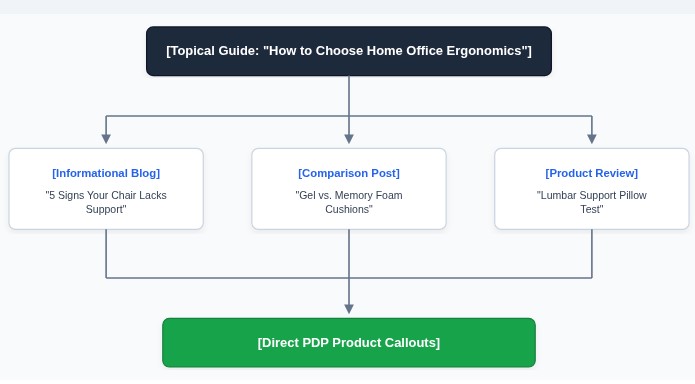
High-Converting Content Best Practices
- Solve Specific Problems: Create step-by-step guides that resolve buyer uncertainties (e.g., “How to choose the right resistance band for strength training”).
- Include Product Cards: Feature direct product details, a summary of key features, and “Add to Cart” links within informative articles, allowing readers to make a purchase without leaving the page.
- Reach Shoppers Who are Researching: People seeking information and comparing options are often close to making a purchasing decision.
5. Overcoming the E-E-A-T Gap in Dropshipping
Search engines prioritize Experience, Expertise, Authoritativeness, and Trustworthiness (E-E-A-T). Since dropshippers do not handle manufacturing directly, establishing the store’s credibility is essential.
- Order Product Samples: Purchase sample units of best-selling items to create custom, high-resolution lifestyle photos and video demos. Original media ranks better than the supplier’s stock photos.
- Display Clear Policies: Prominently display estimated delivery times, return policies, and customer contact information on product pages and in your site’s footer.
- Collect Verified Customer Reviews: Set up a process to email customers after their purchase, inviting them to submit photo reviews and product feedback.
Partnering with Samyak Online for eCommerce Growth
To generate a reliable flow of organic traffic, it is essential to integrate technical SEO, a clean store architecture, structured schema, and conversion-focused content.
Samyak Online brings over 20 years of experience as a digital marketing agency, helping eCommerce merchants and online stores improve search visibility and grow their businesses sustainably.
- Do you need to fix duplicate content issues and improve product rankings?
- Are you looking for a structured SEO and performance marketing roadmap?
Get an eCommerce SEO audit specifically tailored for your online store today.
Visit Samyak Online or call +91-9810083308 to speak directly with our eCommerce digital marketing specialists.
About the Author
Samyak Jain is the Head of Digital Marketing at ‘Samyak Online‘ and specializes in eCommerce SEO, technical web strategy, and performance marketing. With over a decade of hands-on experience in scaling online brands, he develops data-driven growth frameworks. These frameworks improve search rankings, reduce customer acquisition costs, and maximize store revenue in the long run.
FAQ: High-Impact AI & Dropshipping SEO Strategies
Default supplier text triggers Google’s duplicate content filter, causing your store to be de-indexed. Professional AI optimization rewrites the manufacturer’s text, transforming it into unique, benefit-driven product listings. This boosts page credibility, resolves canonical conflicts, and secures organic search rankings for targeted keywords.
JSON-LD structured data provides search crawlers with machine-readable information at the code level. Adding schema for Product, Offer, AggregateRating, and Brand allows live prices, star ratings, and inventory status to appear directly in search results, significantly boosting user trust and organic click-through rates.
Search algorithms prioritize experience, expertise, authority, and trustworthiness. Ordering samples of physical products allows you to create custom photography and video demonstrations. Combining custom media with clear store policies and verified photo reviews boosts your credibility in the eyes of search engines.
Topic clusters focus on informational search queries (such as “how to choose the right posture corrector”). Publishing detailed guides attracts customers to your brand while they are still in the research phase. Linking these articles directly to relevant product pages drives organic traffic to your store visitors who are genuinely interested in purchasing the products.
Synchronization should occur instantly via direct Merchant API integration. Feeds are immediately rejected if there are discrepancies between your store’s live prices or stock levels and the data in Google Merchant Center, causing your products to disappear from AI search results and the Shopping carousel.
Yes, provided the AI content is highly relevant to the context. Search engines prioritize utility over the method of content creation. AI content that offers accurate information, addresses the target audience’s needs, and features natural formatting performs well in search engine rankings.
Due to the rising cost of customer acquisition (CAC), relying solely on advertising spend is no longer sustainable. Organic SEO creates an asset that generates recurring, high-margin sales over time without the need for continuous ‘pay-per-click’ ad expenditure, thereby maintaining healthy overall profit margins.
Verified customer reviews are included in the aggregate rating schema and provide user-generated keyword data. Search engines and AI algorithms analyze customer reviews to assess product performance and directly reference positive user experiences when generating curated recommendations.
Leave a Reply
Want to join the discussion?Feel free to contribute!