
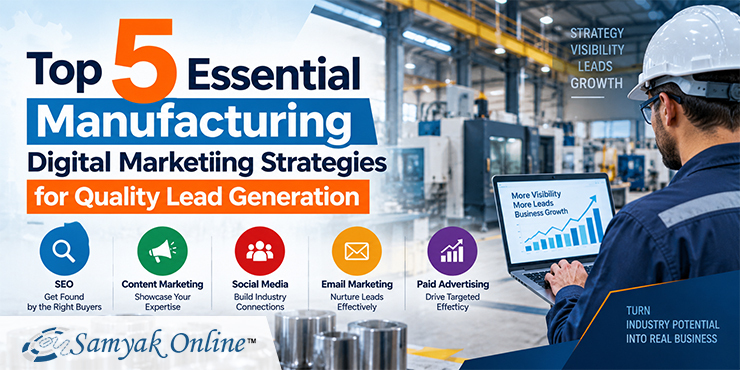
Top 5 Essential Manufacturing Digital Marketing Strategies for Quality Lead Generation
Industrial marketing has undergone a significant transformation in recent years. It is shifting away from a reliance on trade shows, cold calling, and print catalogs toward data-driven digital channels. Research indicates that more than 57% of industrial buyers make over half of their purchasing decisions online before even speaking to a sales representative.
For factory owners, Original Equipment Manufacturers (OEMs), and industrial component providers, adopting a well-planned and systematic approach to their online presence is essential to generate consistent, high-value inquiries. Implementing comprehensive digital marketing services for manufacturers and heavy industrial suppliers helps build the necessary infrastructure to capture niche and high-intent B2B search traffic.
Master Technical Search Engine Optimization for Niche Equipment Queries
Industrial buyers do not search using vague terms; they employ specific serial numbers, precise material grades, dimensional parameters, and complex engineering terminology. Conventional visibility strategies are ineffective in this sector because the target audience comprises engineers, heads of procurement, and plant managers who know exactly what they need.
Capturing these high-intent searches relies heavily on advanced industrial SEO services strategies. When potential clients search for custom CNC machining tolerances or specialized alloy fabrication, your web pages need to rank prominently.
With the help of specialized website architecture and structured data markup developed based on the technical advice of digital optimization partners like Samyak Online search crawlers are able to accurately index complex product catalogs, technical specifications, and engineering data sheets.
Furthermore, optimizing your site architecture for search engines ensures that when procurement committees search for reliable industrial partners, your high-value category pages appear directly before them.
Develop Deep Educational Technical Content and Specification Guides
Industrial sales cycles are often very long and involve multiple stakeholders, such as engineering, finance, and executive leadership. Decision-makers require concrete facts, information regarding compliance with safety regulations, and comparisons of raw materials, rather than catchy marketing slogans.
Publishing detailed whitepapers, material selection charts, application-based blog posts, and engineering guides instantly establishes your credibility. When your web resources provide solutions to complex engineering challenges, you build trust long before a formal Request for Quotation (RFQ) arrives.
Incorporating specialized web content optimization services into advanced digital marketing strategies for the automotive and component manufacturing sectors ensures that your library of technical articles ranks for the long-tail query variations used by modern research teams.
Deploy Precision Pay-Per-Click Advertising for Immediate Pipeline Velocity
Organic search optimization yields long-term benefits, whereas paid search campaigns generate immediate demand for manufacturing capacity or newly launched production lines. B2B buyers often turn to search engines for immediate vendor availability due to strict project deadlines.
By targeting exact-match commercial keywords via Google Ads and Microsoft Advertising, manufacturing brands can avoid waiting months for organic rankings to improve. To maximize the return on ad spend, campaigns should direct traffic to dedicated landing pages optimized for conversion featuring clear details on capabilities, ISO certifications, and easy-to-use RFQ forms.
For companies aiming to rapidly increase lead volume, combining targeted PPC with the expert web design services of digital agencies like Samyak Online ensures that ad clickers convert into high-value sales pipeline opportunities, rather than bouncing away due to slow, unoptimized landing pages.
Leverage Account-Based Marketing and LinkedIn for Committee Targeting
Modern industrial purchasing involves committees comprising, on average, five to ten different decision-makers ranging from plant floor supervisors to Chief Financial Officers. Relying on mass-market or general advertising strategies to reach this specific type of customer results in a waste of money.
By leveraging Account-Based Marketing (ABM) on professional networking platforms, industrial marketers can directly target specific Tier-1 accounts and major manufacturers. Running hyper-targeted LinkedIn ad campaigns that showcase plant capabilities, automated welding robotics, or rigorous quality control standards ensures that your brand remains top-of-mind for engineering directors and supply chain executives.
When used with professional website tracking and visitor identification tools, sales teams can track exactly which enterprise accounts are viewing their technical documentation in real-time.
Showcase Factory Floor Reality Through Digital Trust Signals and Video Media
Procurement officers are hesitant to onboard new manufacturing vendors without verifying production capacity, plant cleanliness, and quality assurance protocols. Traditional stock photography often fails to instill the necessary confidence.
Incorporating authentic video content adds a human touch to your operations and showcases your physical capabilities. Pairing these visual assets with easily downloadable CAD files, compliance certificates, and verifiable client case studies provides the concrete evidence needed to streamline the evaluation process.
Keeping your content repository easily accessible, fast-loading, and mobile-friendly completes the ecosystem designed to transform casual web visitors into trusted, long-term manufacturing partners.
Conclusion
To succeed in industrial lead generation today, it is essential to move beyond traditional networking methods and adopt a multi-layered digital framework. By leveraging precise technical SEO, detailed engineering content, targeted paid acquisition, and rich multimedia that showcases plant transparency, industrial brands can consistently attract and convert high-value buyers. Combining in-house engineering expertise with structured online visibility strategies ensures that your plant operates at full capacity and the sales pipeline remains consistent and reliable.
Frequently Asked Questions
Search Engine Optimization is a gradual process. Most manufacturing and industrial websites begin to show measurable improvements in organic keyword positioning and the volume of relevant inquiries within 4 to 8 months. The exact timeframe depends on the website’s existing authority, technical health, and the level of competition within your specific industrial sector.
Industrial buyers are typically engineers, procurement specialists, or plant operators who seek precise information regarding tolerances, materials, certifications, and compatibility. Vague promotional language fails to address these core needs, whereas detailed technical guides, whitepapers, and specification sheets demonstrate capabilities and instantly establish professional credibility.
Paid search and organic optimization operate differently. Organic search provides visibility over the long term at a lower cost, whereas paid search campaigns capture immediate, strong demand from buyers facing imminent project deadlines or an urgent need for specific replacement parts. Combining these two channels creates a strong market presence.
Providing downloadable CAD drawings, 3D models, and detailed specification sheets simplifies the work of design engineers during product development. When engineers incorporate your components into their initial blueprints, your company automatically becomes the preferred supplier for subsequent production.
Implementing end-to-end attribution tools is essential for tracking the ‘Return on Investment’ (ROI) of digital initiatives. By directly linking initial keyword visits and form submissions to successful manufacturing contracts, marketing teams can accurately determine the revenue generated by each campaign.
Industrial purchasing involves significant financial and operational risks; therefore, companies form purchasing committees comprising engineers, procurement managers, quality assurance leads, and financial executives. The content strategy must address the specific concerns of each stakeholder to effectively guide the account through the evaluation cycle.
Plant managers, field engineers, and procurement officers often review vendor capabilities and technical documents on mobile devices while away from their desks. Slow-loading pages or poor mobile layouts frustrate users and drive them straight to competitors; therefore, fast mobile performance is crucial for customer retention.
Digital marketing does not entirely replace trade shows, but it fundamentally transforms how manufacturers capture demand before and after live events. While trade shows offer excellent opportunities for face-to-face networking, digital channels ensure your plant remains visible 365 days a year to buyers who search for suppliers online rather than walking the exhibition floor.
Leave a Reply
Want to join the discussion?Feel free to contribute!