
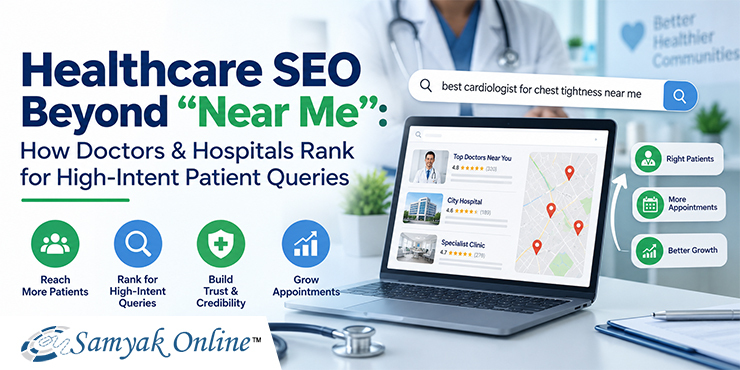
Healthcare SEO Beyond “Near Me”: How Doctors & Hospitals Rank for High-Intent Patient Queries
Key Takeaways: At a Glance
- The Way People Search has Changed: Over 80% of health-related queries are conversational and hyper-specific. Patients do not merely search for general terms like “doctors near me”; instead, they look for precise information regarding their condition and treatment.
- E-E-A-T is Essential: Medical content falls under Google’s YMYL guidelines. To rank, pages must include the doctor’s name (as the author), medical review details, and verified schema markup.
- Structure Improves Ranking: Organizing content into interconnected hubs (e.g., Specialty → Disease → Treatment → Doctor) provides information tailored to patients’ needs and boosts search authority.
- Optimize for AI Overviews: Use clear subheadings, direct answer boxes of around 40 words, and comparison tables so that Google’s AI can feature your site in search summaries.
- Intent-Matched Conversions: Good rankings translate into conversions only when accompanied by clear next steps such as online scheduling, insurance lookup tools, or direct click-to-call buttons.
When a patient types “best cardiologist for chest tightness near me” into Google at 10 PM, they aren’t looking for casual information. They are actually experiencing symptoms, feeling anxious, and urgently searching for a trusted specialist or hospital to book an appointment.
For years, healthcare digital marketing was simple: build a clean website, include a few location-based keywords, claim a Google Business Profile, and wait for customers to arrive via local “near me” searches.
Today, search behavior has transformed. More than 80% of health-related queries are conversational, highly specific, and symptom-focused. Patients now ask search engines complex questions, such as “Can meniscus tears in people over 40 heal without surgery?” or “Which is the best hospital for pediatric neurology that is accepting new patients?”
Furthermore, due to Google’s AI Overviews and Search Generative Experience (SGE) which display health-related topics prominently at the top of search results, standard local SEO alone is insufficient for ranking. Doctors and hospital systems must specifically optimize for searches driven by clear patient intent focusing on the precise questions patients ask right before booking a consultation.
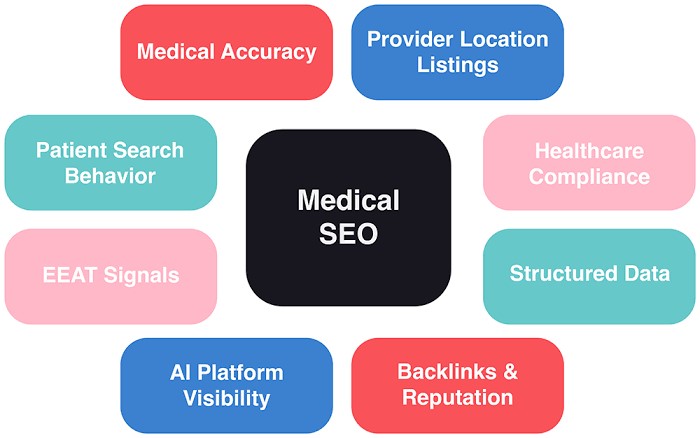
What Is a High-Intent Patient Search?
AI Overview Snippet: High-Intent Patient Search
A ‘high-intent patient search’ is a search engine query made by a user who is actively seeking immediate medical care, a specific treatment, or a particular healthcare provider. Unlike searches for general information, high-intent queries reflect a clear intention to book an appointment and often include specific filters related to conditions, treatments, physician qualifications, or insurance (e.g., “joint replacement specialist accepting new patients in [City]”).
Understanding the search intent spectrum helps healthcare marketers allocate their budgets to areas that yield direct patient registrations rather than traffic that does not convert.
| Search Intent Type | Patient Mindset | Example Search Query | Conversion Potential |
| Informational | Researching symptoms or general anatomy | “Why does my lower back hurt after sitting?” | Low (Early Awareness) |
| Investigative | Comparing treatment paths or procedures | “Physical therapy vs surgery for herniated disc” | Medium (Evaluation) |
| High-Intent (Commercial/Transactional) | Ready to choose a specialist or schedule an appointment | “Top spine surgeon for disc replacement in [City]” | High (Direct Booking) |
Master Medical E-E-A-T and YMYL Compliance
Google classifies all healthcare content under YMYL (Your Money or Your Life) guidelines. Since medical information directly impacts people’s health and physical safety, search algorithms apply rigorous E-E-A-T (Experience, Expertise, Authoritativeness, and Trustworthiness) standards before assigning high rankings.
If a page lacks verifiable medical information, traditional keyword optimization alone will not be sufficient to rank for competitive and high-intent searches.
Key E-E-A-T Action Items for Medical Practices
- Board Review and Citation: Every treatment page and clinical blog post must be written or medically reviewed by a board-certified physician (MD, DO, or relevant specialist).
- Comprehensive Provider Schema: Implement structured data for doctors and medical clinics. Link the doctor’s profile directly to their NPI (National Provider Identifier) number, academic affiliations, and medical board certifications.
Clear Author Information: Clearly display the doctor’s bio, qualifications, and editorial review notes at the top of all pages related to medical conditions and treatments.
Structure Treatment & Condition Hubs for Conversion
Many healthcare websites make the mistake of listing all their specialties and treatments on a single, general “Services” page. However, patients usually search for specific diseases, treatments, or medical conditions. Create dedicated pages that clearly link specialties, conditions, treatments, and doctors:
Orthopedics (Specialty Hub)
→ Knee Osteoarthritis (Condition Page)
→ Total Knee Replacement (Treatment Page)
→ Minimally Invasive Knee Surgery (Treatment Page)
→ Dr. Jane Doe, MD (Knee Specialist Profile)
This creates a clear relationship between the:Specialty → Condition → Treatment → Doctor → Location
High-Converting Page Layout Blueprint
- Clean Hero Section: State the specific procedure or condition, indicate location availability, and include a clearly visible “Book Consultation” button at the top of the page.
- Direct Answer Box (AI-overview Friendly): Provide a concise definition in 2-3 sentences covering the procedure, requirements for the candidate, and the recovery time.
- Symptoms and Eligibility Criteria: Criteria listed in bullet points that indicate who is eligible for this treatment.
- Doctors’ Profiles: Display information about the doctors practicing at that clinic.
Frequently Asked Questions (FAQs) for patients: Provide information regarding costs, insurance coverage, recovery time, and preparation instructions using FAQPage schema markup.
Create Content Around Real Patient Questions
High-intent healthcare SEO is not limited to just treatment pages.
Patients also look for answers to certain questions right before making healthcare-related decisions. For example:
Symptoms
- “Why does my knee hurt when climbing stairs?”
- “When should I see a doctor for persistent back pain?”
Conditions
- “Early signs of osteoarthritis”
- “Can a meniscus tear heal on its own?”
Treatments
- “How does knee replacement surgery work?”
- “Is minimally invasive knee surgery right for me?”
Comparisons
- “Physical therapy vs knee surgery”
- “Cortisone injection vs knee replacement”
Recovery
- “How long does knee replacement recovery take?”
- “When can I walk normally after surgery?”
Provider Selection
- “Best knee replacement surgeon in [City]”
- “Knee specialist accepting new patients”
Each question reflects a different stage of the patient’s decision-making process.
An excellent healthcare website should provide useful information at every stage, not just at the final step of booking an appointment.
Optimizing for AI Overviews & Generative Search
Google’s AI Overviews generate instant snapshot summaries for medical queries using reliable, authoritative clinical sources. To ensure your practice or hospital is selected as an AI reference link, structure your content for machine readability.
AI Overview Snippet: How AI Overviews select healthcare-related sources.
Google’s AI Overviews prioritize medical content that provides direct and concise answers (under 50 words) to specific clinical questions. Additionally, the content should include schema markup, clear subheadings, and explicit medical reviews by board-certified professionals. Pages featuring structured tables and straightforward, bulleted steps are significantly more likely to be included in AI summary blocks.
Ways to Get Included in AI Overviews
- Target Long-Tail Question Keywords: Answer conversational questions directly in the subheadings (e.g., ### How long does it take to recover after outpatient knee arthroscopy?).
- Answer First: Before providing technical details, give a concise and direct answer within the first 30-40 words, right below the heading.
- Use a Comparison Table: Summarize procedure options, recovery timelines, or diagnostic tests in a clean HTML table.
Local SEO Beyond “Near Me”: Multi-Location Optimization
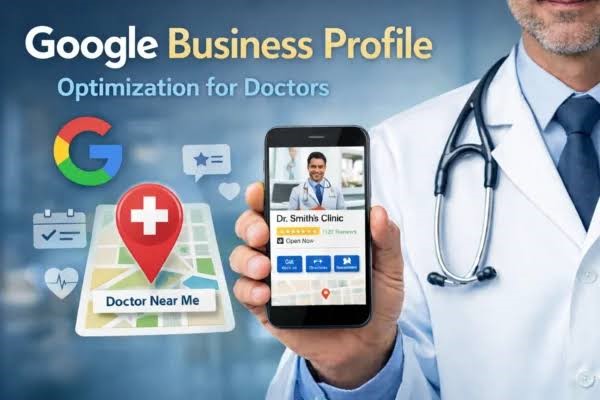
While patients highly motivated to seek treatment conduct extensive research, location remains a crucial filter. For modern local SEO, it is essential to ensure data alignment between your main website and the Google Business Profiles (GBP) for all physical clinic locations and individual doctors.
| Optimization Area | Single-Clinic Practice | Multi-Location Hospital System |
| Google Business Profile (GBP) | Primary practice GBP with individual practitioner profiles nested within. | Dedicated GBP for every physical branch, urgent care unit, and specialized department. |
| Landing Pages | Unique local landing page tied to city/neighborhood keywords. | Individual location pages with embedded maps, staff rosters, and site-specific service lists. |
| Review Strategy | Systematic post-appointment SMS/email review invites targeting the main practice profile. | Location-specific review routing to ensure balanced review velocity across all facilities. |
| Schema Implementation | MedicalClinic schema with location address and hours. | Multi-tier Hospital, MedicalClinic, and Physician schema hierarchies. |
Maintaining Medical Compliance & HIPAA Integrity
SEO in the healthcare sector entails certain regulatory responsibilities that commercial SEO does not face. Violating patient privacy regulations can damage your business’s reputation and lead to severe regulatory penalties.
- Review Responses: Never disclose in a public response that the reviewer is a patient, even if they have shared details about their treatment. Provide neutral responses that comply with HIPAA regulations and suggest continuing the conversation privately through official offline channels.
- Tracking and Analysis: Ensure that website analytics tools, call-tracking scripts, and ad-tracking pixels strictly adhere to HHS guidelines regarding Protected Health Information (PHI).
Turn Search Visibility Into Patient Action
Achieving a top ranking on Google is just the first step. A healthcare page might attract thousands of visitors each month, but if the next step is confusing, hidden, or misaligned with the user’s needs, those visitors will return to the search results and opt for a competitor’s service instead.
High-converting healthcare SEO directly connects the patient’s precise search intent to the right action pathway on the page. Depending on the organization, elements useful for conversion may include:
- Book an Appointment
- Request a Consultation
- Call the Clinic
- Find a Location
- View Doctor Availability
- Check Insurance Information
- Get Directions
The conversion path should align with the patient’s intent. Someone researching a particular symptom might first need informative details. Someone looking for a specific surgeon might be ready to view the doctor’s profile or book an appointment.
Partnering for Healthcare SEO Growth
Healthcare-related searches are becoming increasingly precise and competitive, and AI-powered search experiences are rapidly influencing this landscape.
Therefore, achieving good visibility requires doing much more than simply adding location keywords to the website. Doctors, clinics, and hospitals need a connected strategy that brings them all together:
E-E-A-T + Content Architecture + Condition & Treatment Pages + Provider Profiles + Local SEO + Technical SEO + AI Search Optimization + Conversion Strategy. The most successful healthcare websites don’t just try to rank for “doctor near me.”
Grow Your Healthcare Search Visibility With Samyak Online
Samyak Online is widely recognized as a leading digital marketing agency for doctors, multi-specialty clinics, and hospitals. We assist doctors, clinics, hospitals, and healthcare organizations in developing digital marketing strategies focused on search visibility, healthcare SEO, local search, content architecture, technical SEO, and AI-powered search experiences.
With over 20+ years of experience in digital marketing, Samyak Online helps healthcare businesses strengthen their online presence and create search journeys designed to convert the right traffic into qualified inquiries and appointments.
Do you want to go beyond “near me” searches and reach patients who are actively looking for your specialty, treatments, or doctors?
Start evaluating your website based on a simple question: Can a patient who knows exactly what they need find the right page for their condition along with treatments, doctors, locations, and the next steps in just a few clicks?
About Author
Samyak Jain is the Digital Marketing Head at Samyak Online, specializing in search engine optimization, content strategy, and AI-driven search solutions. With over a decade of industry experience, he develops data-driven digital strategies that help healthcare providers, local service businesses, and enterprises expand their organic reach and acquire high-intent leads.
Frequently Asked Questions (FAQs)
Healthcare SEO is subject to the strict rules of Google’s YMYL (Your Money or Your Life) guidelines and E-E-A-T standards. Content must be medically accurate, reviewed by certified doctors, and compliant with patient privacy laws such as HIPAA. Furthermore, search intent in healthcare is highly personal, requiring sensitive approaches and direct conversion paths.
Google’s AI Overviews display accurate and reliable answers to health-related queries directly at the top of search results. To be featured in these AI summaries, medical websites must provide direct answers ranging from 30 to 50 words under question-based subheadings, utilize structured JSON-LD schema markup, and incorporate board-certified editorial reviews.
A ‘high-intent’ search query is made by a user who is ready to immediately select a service provider or book a consultation (e.g., “minimally invasive spine surgeons accepting new patients in [City]”). Unlike general searches regarding symptoms, ‘high-intent’ queries reflect a strong commercial or transactional purpose and yield the highest appointment conversion rates.
Yes. Google Business Profiles for individual practitioners can be associated with or located within the main clinic location. However, the medical practice must ensure consistency in the Name, Address, Phone Number (NAP), and category to avoid issues such as duplicate listings or the fragmentation of reviews.
Medical practices can send automated SMS or email requests for reviews using HIPAA-compliant software. When publicly responding to a review on Google, medical staff should never confirm or deny that the reviewer is a patient, nor should they mention treatment details, even if the patient has disclosed that information in their review.
Patients search for specific health issues, symptoms, and surgical procedures rather than general service categories. Dedicated pages help you target long-tail keywords, outline specific recovery expectations, highlight specialized doctors, and build in-depth content (topic authority) all of which are rewarded with better rankings by search engines.
At a minimum, medical websites should implement MedicalClinic (or Hospital), Physician, MedicalCondition, MedicalProcedure, and FAQPage schemas. These structured data formats help search engines understand a doctor’s qualifications, clinic location, insurance coverage, and clinical content, enabling them to be displayed accurately in search results.
While basic technical improvements and local Google Business Profile optimization can enhance visibility within 30 to 90 days, it typically takes 6 to 9 months to see a significant increase in appointments through organic healthcare SEO. In highly competitive specialties or major cities, building consistent E-E-A-T may require 9 to 12 months.
Voice searches on smartphones and smart devices often consist of long, conversational queries (e.g., “Who is the best pediatric dermatologist near me open on Saturday?”). To optimize for these conversational queries, it is essential to target ‘long-tail’ question phrases and provide clear, organized answers near the top of the page.
Yes. Each branch should have its own distinct, indexable landing page featuring a Google Map, local address and phone number, business hours, staff list, and details of specific services offered. This will prevent keyword cannibalization and ensure strong local map rankings for each branch.
Typically, standard websites have a conversion rate of around 2% to 3%, whereas optimized healthcare landing pages specifically designed to target patients highly motivated to seek treatment often achieve conversion rates of 5% to 10% or higher. Features such as clear online booking widgets, prominently displayed phone numbers, and instant insurance verification significantly boost these rates.
While negative reviews do not cause an immediate drop in rankings, a decline in the overall star rating (below 4.0 stars), a slow rate of receiving reviews (few new reviews), or a failure to respond to negative feedback can reduce patient click-through rates and signal to search algorithms that the listing is less trustworthy.
Independent clinics can outperform large hospital systems by focusing on specialized treatments, rapidly garnering reviews on local maps, creating detailed content developed by doctors, and offering a more personal and convenient online appointment booking experience.